
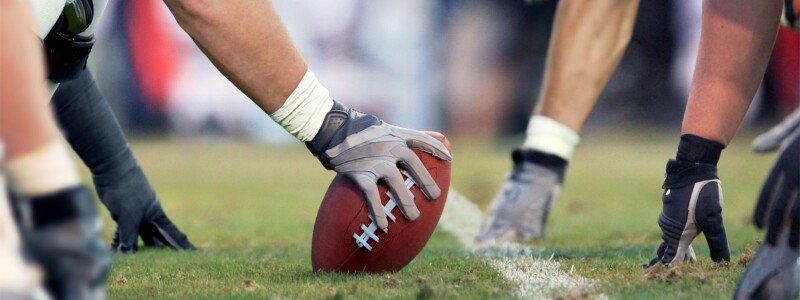
Outside the Pittsburgh Steelers’ stadium, the NFL Draft clock will continue to tick until the kick-off on April 23, 2026. In the meantime, millions of fans are consuming billions of stories previewing the draft, the vast majority of which understandably focus on the Sport of football. But the three-day NFL Draft experience is about more than just Sports: it’s a Sports, Entertainment, Art and Legal Extravaganza.
So, how should one tackle this multi-faceted event? By drawing on the insights of insiders from the University of Pittsburgh’s online graduate Certificate of Sports, Entertainment and Art Law—aka the SEAL Team.
The NFL Draft as a Sports and Entertainment Spectacle
Let’s start by looking at the NFL Draft from the perspective of Sports and Entertainment. While the player picks will be center stage, fans will also be treated to live music performances, featuring Whiz Khalifa, Brett Michaels, Kane Brown, and a long list of other talented musicians.
Looking for NFL Draft Art? Look no further than the NFL Draft’s official branding and visual style guide, which was inspired by Pittsburgh’s pop art and industrial roots. Or perhaps you prefer a free, family-friendly, in-person experience? Then check out the University of Pittsburgh’s Block Party at Arts Landing.
The Legal Foundation of the NFL Draft
Long before these featured events were announced, the NFL Draft was built on a foundation built of Legal entities, contracts, and professionals. Yet as Super Bowl great Tina Turner might well ask, “what’s [law] got to do with it?” A lot, as putting on the NFL Draft requires the resolution of numerous legal issues.
Understanding these many legal issues can be overwhelming, but the SEAL Team can help you tackle these issues by breaking the NFL Draft into its essential raw materials and related areas of law, including:
Key Legal Areas
- Talent, which relates to Labor & Employment Law
- Content, which relates to Intellectual Property Law
- Money, which relates to Finance Law
- And the Means of Delivery, which relates to Distribution Law
Talent and Labor & Employment Law
Let’s start with Talent, which includes the athletes, entertainers, and artists, as well as the people working off the field, screen, or page. Labor & Employment Law governs Employers, like the for-profit NFL, government entities like the City of Pittsburgh, and non-profits like Visit Pittsburgh.
Labor & Employment Law also governs Employees and Unions, such as the highly visible NFL Players Association and the SAG-AFTRA actors union, as well as behind-the-scenes unions for broadcast workers (IATSE), truck drivers (Teamsters), and government employees (AFSCME). Other workers include Independent Contractors, such as food and merchandise vendors, and local Volunteers, who will be assisting out-of-town guests.
Content and Intellectual Property Law
What roles do Content and Intellectual Property Law play in the NFL Draft? Copyright Law protects print, TV, streaming, and musical Content. Trademark Law will protect the logos of the many organizations involved. Patent Law protects the technologies required to produce and distribute the Content. And Trade Secret Law will protect the draft picks by teams until they are announced for all to hear.
Money and Finance Law
What about Money and Finance Law? The Money required to fund the NFL Draft comes from many different sources, all of which are documented by Contract Law. For-profit sources include the NFL and Corporate Sponsors, like PNC Bank. Non-profit funders include Visit Pittsburgh and the University of Pittsburgh Medical Center (UPMC). Government funders, including the City of Pittsburgh, Allegheny County, and the Commonwealth of Pennsylvania. In all, government and non-profit sources have directed almost $19 million toward the Pittsburgh NFL Draft, with hopes of generating at least $120 million in economic impact for the region.
Means of Delivery and Distribution Law
And what are the many Means of Delivery and Distribution Laws required to reach the millions of in-person and virtual “consumers” of the NFL Draft? While the in-person events are free, they do require attendees to sign a waiver of Tort Law Liability. These events also require agreements between Federal, State, Local, and private security entities. For those watching from home or their phone, the Media Rights Agreement between the NFL and Disney includes programming on ESPN, ABC, and the NFL Network. And you can bet that both the in-person and virtual events are covered by many Insurance Contracts.
Learn More With the SEAL Program From the University of Pittsburgh
If you want to learn about the Law governing other Sports, Entertainment, and Art, you can join our team by applying to our SEAL Certificate program, which is the only online graduate certificate that covers Sports, Entertainment, Art, and the Law.